After 4 days of stay in Manila for the 2015 Papal Visit I made my way to the center of historic Philippines - Intramuros. This walled city became the center of the archipelago for 333 years of Spanish colonization. It became the headquarters for the Government and Church authorities.
This 64-hectare stone citadel was founded by the Spaniards in 1571 and from then has withstood wars, natural disasters and successive colonial invaders.

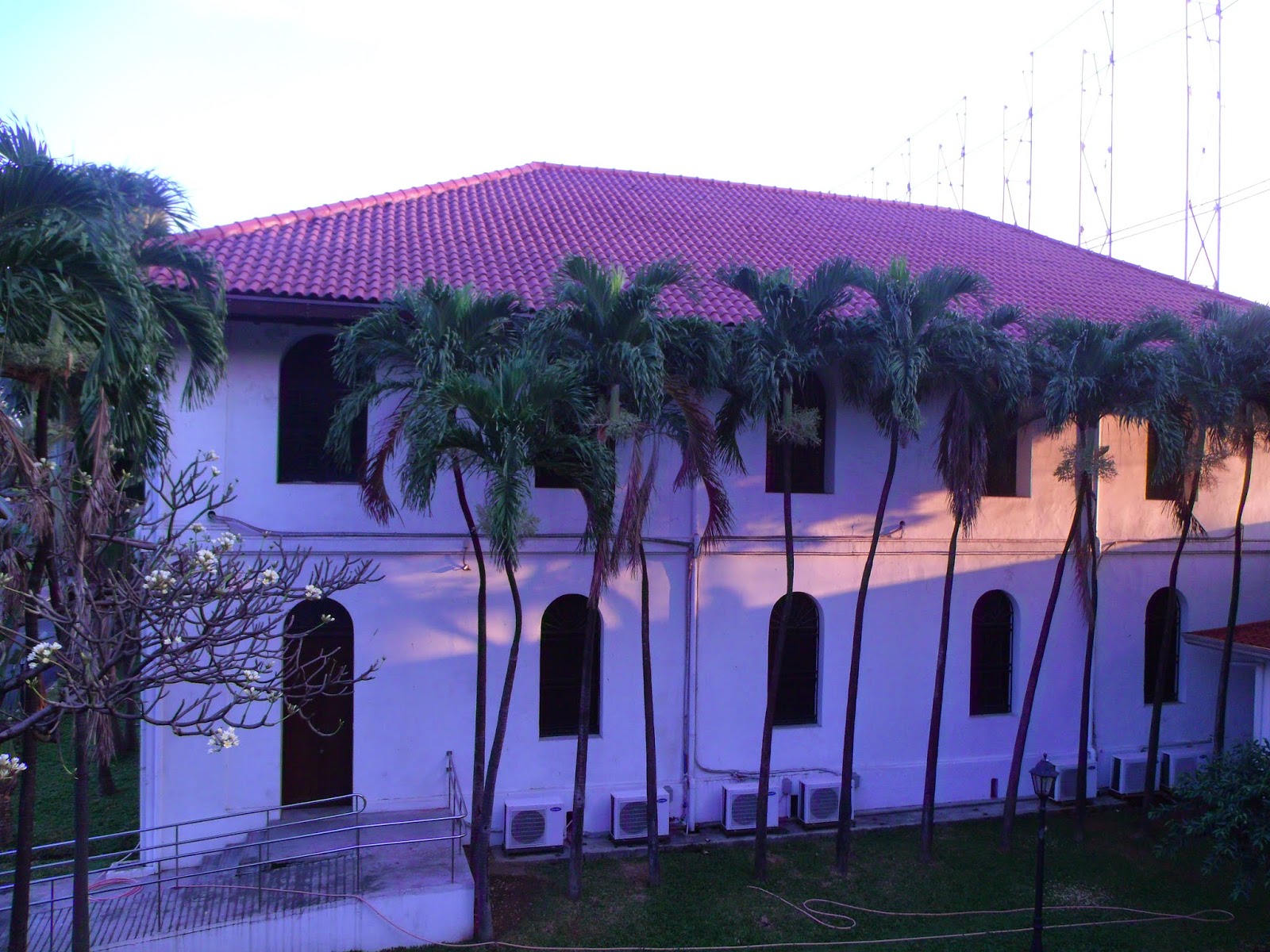
Intramuros is also visited for the detention cell of the National Hero of the Philippines. It was here that Dr. Jose Rizal was detained, accused and was sentenced to death. Literally, it was in Intramuros where the hero spent his last days.
Inside the renovated cell of Dr. Rizal is displayed a collection which commemorates the life and works of this great son of the Malayan race. One can see inside different apparatuses he used as a doctor, different tools he used as an artists, different specimen he used to send to scientific colleagues abroad and the book which brought him to his fate.

Dr. Rizal after detained and sentenced to death inside this walled city was shot in the nearby Bagumbayan which is now Luneta or Rizal Park.


This walled city lies along the banks of the Pasig River for the purpose of good military location and even transpotation.

It hosts for the office of the Catholic Bishop's Conference of the Philippines. The conference where every Roman Catholic Bishop is a member and who manages correspondence between Rome and individual dioceses in the Philippines.


Inside the walled city also is located the mother church of all churches in the Philippines known as the Metropolitan Cathedral of Manila or the Minor Basilica of the Immaculate Conception. This mother-church holds the seat of the Archbishop of Manila.

Scores of Museum offering local and foreign visitors line in the streets of this historic city. An example of this is the San Agustin Church Museum which holds the relics and artifacts of this historical Church of the Augustinian Order. This is the only church which has withstand the disaster brought about by the Japanese Soldiers during the second World War.

Casa Manila is another example of the many museum inside Intramuros. Its setting is that of a typical house setting during the Spanish era and showcases furniture and other embellishments.

One of the iconic symbol for historic Manila is the typical transport during that time. The status symbol used by the Illustrados or the educated and enlightened branch of Filipinos which is the Calesa.
For a rate, these Calesa drivers will take you for an hour ride around the walled city and explaining you bits of facts about history.


Most of the original buildings inside the walled city were destroyed during the Japanese invasion and brought about destruction inside this historic walls. But today, some were already renovated and put to its original make-up while others were totally changed.
Walk by Intramuros and know the Philippines of long ago.
This 64-hectare stone citadel was founded by the Spaniards in 1571 and from then has withstood wars, natural disasters and successive colonial invaders.
Intramuros is also visited for the detention cell of the National Hero of the Philippines. It was here that Dr. Jose Rizal was detained, accused and was sentenced to death. Literally, it was in Intramuros where the hero spent his last days.
Inside the renovated cell of Dr. Rizal is displayed a collection which commemorates the life and works of this great son of the Malayan race. One can see inside different apparatuses he used as a doctor, different tools he used as an artists, different specimen he used to send to scientific colleagues abroad and the book which brought him to his fate.
Dr. Rizal after detained and sentenced to death inside this walled city was shot in the nearby Bagumbayan which is now Luneta or Rizal Park.
This walled city lies along the banks of the Pasig River for the purpose of good military location and even transpotation.
It hosts for the office of the Catholic Bishop's Conference of the Philippines. The conference where every Roman Catholic Bishop is a member and who manages correspondence between Rome and individual dioceses in the Philippines.
Inside the walled city also is located the mother church of all churches in the Philippines known as the Metropolitan Cathedral of Manila or the Minor Basilica of the Immaculate Conception. This mother-church holds the seat of the Archbishop of Manila.
Scores of Museum offering local and foreign visitors line in the streets of this historic city. An example of this is the San Agustin Church Museum which holds the relics and artifacts of this historical Church of the Augustinian Order. This is the only church which has withstand the disaster brought about by the Japanese Soldiers during the second World War.
Casa Manila is another example of the many museum inside Intramuros. Its setting is that of a typical house setting during the Spanish era and showcases furniture and other embellishments.
One of the iconic symbol for historic Manila is the typical transport during that time. The status symbol used by the Illustrados or the educated and enlightened branch of Filipinos which is the Calesa.
For a rate, these Calesa drivers will take you for an hour ride around the walled city and explaining you bits of facts about history.
Most of the original buildings inside the walled city were destroyed during the Japanese invasion and brought about destruction inside this historic walls. But today, some were already renovated and put to its original make-up while others were totally changed.
Walk by Intramuros and know the Philippines of long ago.


